Showing posts with label theology. Show all posts

Tuesday, July 7, 2020

Paul the Apostle and Theology


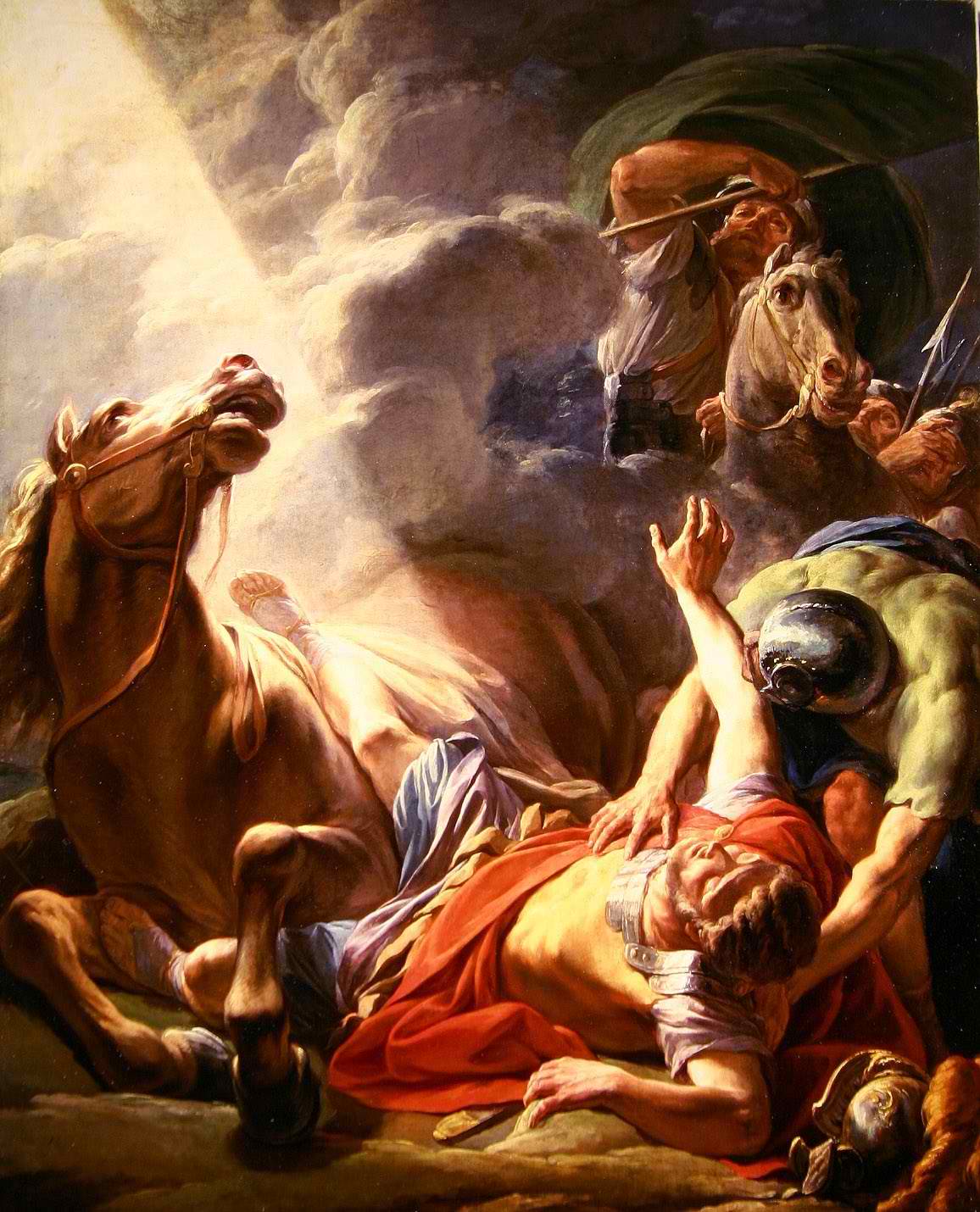
The first chapter of Galatians is a good explanation of the ministry of Paul the Apostle. He wants his readers to understand that his knowledge of Jesus comes directly from an encounter with the living Christ and then a continued friendship with Jesus. His teachings are both grounded in the words of Jesus for he has heard them from first-hand witnesses like Peter and James, and they are an interpretation and a theology of those words that have been worked out under the guidance of the Holy Spirit. Jesus has shown that the accounts of the life of the Lord here on earth and the very words of Jesus are sufficient for all who follow him and that they must be understood and interpreted for each new situation and context within which the disciples of Jesus find themselves. The twelve apostles (eleven if we leave out Judas) and the early followers had not yet envisioned what it would mean for the life and words of Jesus to impact the Gentile people. They could interpret the life and words of Jesus for a Jewish context, of law, circumcision, diet, and special worship days, but their minds could not grasp how to help the Gentiles follow their Rabbi. That task was given to Paul by direct revelation and through the advanced theological training of the mind of Paul.


Too often we have pitted the words of Paul against the words of the Gospel writers. We have thought that Paul was too distant from Jesus and did not know enough of the very words of life spoken by him. Paul makes it clear that, like Peter and like James, he has been given his ministry by Jesus and has the words of life implanted deep within his theology. The very theology of the words of life has been imparted to him by Jesus. Paul shows us that it is not enough to simply read the words of Jesus, laid down for us by first-hand witnesses and then do what the first-hand witnesses did. Paul’s ministry was to deeply understand the words of Jesus and then interpret those words for a rapidly changing world while remaining true to the initial hearing and meaning of those words of Jesus. There is a recognition that the words of Jesus must be heard and then understood in a given context. There is a recognition that a poor fisherman on the shore of Galilee must understand the words of Jesus differently than a wealthy maker of purple clothes (such as Lydia from Thyatira) or middle-class tent-makers (such as Aquila and Priscilla) or a rich young ruler.


Certainly, there is a place for the call to be “Red-Letter Christians.” We must always heed the red letters, that is the words specifically ascribed to Jesus in the gospels, but this does not negate the other Holy Spirit inspired words of the Bible, the large part of which are written about the travels, life, work, evangelism, and theology of the Apostle Paul and his companions in the gospel - a gospel which was being worked out as it spread through the known world of the time.


In our present context, we too must be Red-Letter Christians who give special heed to the words of Jesus, and then interpret and understand those words for our time. What did it mean for a Jesus-follower in the first century when Jesus said, “Render unto Caesar what belongs to Caesar and unto God what belongs to God,” and what does it mean to a 21st century citizen of Canada? What principles will be the same and what principles will be different? How do Paul’s words in Romans 13 (which in part tell us to "obey the authorities,") help us to understand how to “render unto Caesar”? May those who have ears to hear, hear the implications of these words for a world rocked by protest, violence, and calls for defunding. Lord have mercy upon us all, this is our prayer for our souls, for the oppressed, and for our broken world.


As a footnote to this blog, may I call upon Christians everywhere to pray for one of the original Red-Letter Christians. Dr. Anthony Campolo is presently in the hospital having suffered a stroke on June 20th. His wife, Peggy, is as much by his side as she can be given the limitations due to the current coronavirus pandemic. Dr. Campolo’s son, Bart shared the news of the stroke in an email to those who follow the Campolo Center for Ministry. Please pray for this great preacher and theologian of the faith.


Friday, June 12, 2020

Of Science and Theology


J.B. Stump recently published an article in the Journal of the American Scientific Affiliation: Perspectives on Science and Christian Faith. The article is entitled “Did God Guide Our Evolution?”[1] Since many readers will not have ready access to this journal, allow me to give a summary. As he says, at one point in the paper, it might have been a very short paper if he simply answered ‘yes.’ Of course, the answer is much more nuanced than that because if one says yes, that person would open themselves to the criticism that neo-Darwinism is not the kind of process that could be guided. The person who says no, sounds like a deist who believes that God simply got the ball rolling at the Big Bang and left everything to chance and survival of the fittest.


Stump speaks of those of us who believe in both God and science and speaks of the tension many of us feel regarding the question of God’s guidance of the natural process.


“There is an often-unresolved tension for many of us who have these twin intuitions:

·       As science-minded people, the more we examine the development of life, the more we are persuaded of the efficacy and integrity of natural mechanisms.

·       As Christians, the more we learn of God and his ways, the more we are persuaded that God loves us and has partnered with us to achieve God’s purposes for the world.

The first of these intuitions leads us to think that science, while not infallible, has shown itself to be a reliable, truth-discovering enterprise, and that, therefore, the science describing our evolution is at least largely correct. The second leads us to believe that God had (and has) a plan for us as image bearers, and therefore God did all that was necessary to provide for our appearance on Earth.”[2]

He says that these two intuitions can be formalised into the following two claims:

“C1. Evolution is the best scientific explanation for the origin of Homo sapiens.

C2. God intentionally created human beings in God’s image.”[3]


For the rest of the paper Stump goes on to speak of the various ways in which scholars have created strategies to hold these two claims together in such a way that they can both be true. He summarises three views and the criticisms of those views before giving us his own conclusion on how this can be done. He speaks of the Semantic Strategy, the Nomological Strategy, and the Causal Joint Strategy, before giving us his Epistemological Strategy. I won’t go into all the details, those who wish to can find and read the full article. Let me skip to the final strategy and conclusion.


The basic idea of the Epistemological Strategy is that science and theology are different ways of knowing. Both are true and both make truth claims about the world around us. The two truth claims, C1 and C2 tell the same story in different ways and “neither tells the whole story.”[4] Stump then makes an important point when he says that,

“It has been the tendency to treat the scientific discourse as the real description of things and to treat whatever does not fit within that discourse (e.g., free will, morality, meaning) as folk psychology and fictions. But that is to succumb to scientism.”

Although Stump does not say it specifically, we might also say that treating whatever does not fit the theological discourse as ‘not real’ is to succumb to ‘theologicism.’ We cannot think that the Bible has the answer to every question (e.g., how long it took to make the universe, or does a hare chew a cud?[5]) for God has also communicated to us through his creation and encourages us to use our minds.


Stump distinguishes his Epistemological Strategy from Stephen Jay Gould’s non-overlapping magisteria approach (NOMA) and its inherent flaws. He notes that in the NOMA explanation, science deals with fact and theory while religion deals with feelings and values; in his own epistemological explanation, both science and theology are “making factual truth claims.”[6]


Stump reminds the reader that we need a both/and approach to understanding our universe (as in previous blogs, I again refer my reader to the Two-book Theory of God’s revelation[7]) and that without both ways of knowing “we are going to get an incomplete answer.”[8] Furthermore, he points to two examples of how we must get used to both/and thinking when observing our universe. One of these comes from scientific discourse and one from theological discourse. In science, when we describe light, we must keep in mind that it is both a wave and a particle (not easy to conceptualise but we must think in both/and) and in theology, when we describe God, we must keep in mind that he is both three and one (again, not easy to conceptualise). So, both the scientific and theological means of knowing have their place. J.B. Stump has done a great service in helping to explain why both are necessary.


[1] “Did God Guide Our Evolution?”, J.B. Stump, Journal of the American Scientific Affiliation: Perspectives on Science and Christian Faith, Vol. 72, No. 1; March 2020. 

[2] Stump, p. 16.

[3] Stump, p. 16.

[4] Stump, p. 20.

[5] There is a whole theological conversation around the words of Lev. 11:3-6 and Deut. 14:7 about whether or not it is accurate to describe a hare as chewing a cud. The conversation can get rather pointed and borders on irrational when people expect the whole answer to be found in the Bible.

[6] Stump, p. 22.

[7] “Two Books Theology means understanding how Christian theologians from the very beginnings of the Church have understood God’s self-revelation, as well as the relationship between Scripture and Creation.” “The Church Fathers and Two Books Theology” Biologos, Mark H. Mann, 2012.

[8] Stump, p. 22.

Friday, June 5, 2020

Of Romans and Adam


John R. W. Stott (1921-2011) was a theologian, writer, Anglican Priest, and preacher. His thoughtful commentary on the book of Romans, The Message of Romans (The Bible Speaks Today series; IVP Academic, 1994), has been an important resource for my understanding of the theology of the Apostle Paul. Today, I would like to focus on Stott’s brilliant words regarding Paul’s theological understanding of Adam: the first man of creation.

Stott peers back through the primordial mist to the time of Adam and seeks to understand the nature Stott observes, in the ancient fossils of the day, and the words of the Bible in Genesis, Romans, and other parts of sacred scripture. He is well-aware that aspects of Genesis 1-3 can only be interpreted symbolically (p. 163) and explains how Paul uses his knowledge of creation and The Fall to build a theological argument for the righteousness bestowed by Jesus.

Stott then states that he believes “Scripture clearly intends us to accept their [Adam and Eve’s] historicity as the original human pair” (p. 163), and that Adam and Eve were Neolithic farmers in the New Stone Age which ran from 10,000 to 6,000 BC (p. 163). He is aware of, and comfortable with, the human fossil and skeletal records which show that modern homo sapiens can be traced back to 100,000 years ago and homo sapiens (archaic) to about 500,000 years ago. He also knows that the record shows that there are other species of hominids who lived before homo sapiens. Homo erectus dates back to 1.8 million years ago and homo habilis from 2.3 to 1.65 million years ago. Some of these species and sub-species (Neanderthal man is an example of a subspecies which could interbreed with homo sapiens) showed signs of the beginnings of culture such as painting, carving, care for the sick, and burial of the dead (p.164). Even as Stott knows all of this, he also emphasises that this does not contradict with the scriptural understanding of Adam and Eve (p. 163). 

Then Stott makes this interesting statement: “Adam, then, was a special creation of God, whether God formed him literally ‘from the dust of the ground’ and then ‘breathed into his nostrils the breath of life’, or whether this is the biblical way of saying that he was created out of an already existing hominid. The vital truth we cannot surrender is that, though our bodies are related to the primates, we ourselves in our fundamental identity are related to God” (p. 164). The first half of this interesting statement has to do with how, in Stott’s opinion, God may have gone about forming Adam. Stott is suggesting that God has been creating galaxies, planets, plants, animals, and pre-Adamic hominids, but now God pauses to stoop down in a special creative process to create Adam (and Eve). He envisions a time when many creatures have been walking about on a newly created earth and then God starts fresh with some dust of the ground to create his most precious creation. This is Stott’s first vision of the creation of Adam. But then he says, it might have been that God created Adam “out of an already existing hominid.” John Stott is being gracious toward the varying opinions of “how” Adam came to be (since we cannot see back through time to know precisely what God was doing then we must, to some degree, speculate on the process) but is resolute in the “vital truth we cannot surrender.” That truth, says Stott, is that “though our bodies are related to the primates, we ourselves in our fundamental identity are related to God” (p. 164).

Stott goes so far as to invent his own name for Adam’s species and calls him homo divinus (p. 164) before going on to quote Derek Kidner who suggests "that once it became clear that there was ‘no natural bridge from animal to man, God may have now conferred his image on Adam’s collaterals, to bring them into the same realm of being. Adam’s “federal” headship of humanity extended, if that was the case, outwards to his contemporaries as well as onwards to his offspring, and his disobedience disinherited both alike’"(p. 165). “Federal,” in this context refers to God’s act of entering into a covenant (or federation) with humanity through the first human, Adam. Kidner and Stott are saying that God entered into a covenant with humanity and then when the federal head of humanity disobeyed, the disobedience, consequences, and the curse of breaking the covenant, extended to Adam’s contemporaries and his offspring.

Having discussed Adam’s creation, “federal” headship, and disobedience, Stott next speaks of Adam’s death. Stott knows that death existed before Adam’s fall. He can see that there was death in both God’s plant and animal life-cycles. Stott sees plant death in the cycle of blossom, fruit, seed, and death as described in Genesis 1:11. He sees animal death in the fossil record of predators with prey in their stomach (p.165). It is interesting to note Stott’s logic and see that he comprehends that God speaks to him as a theologian through both scripture and nature (the two-book theory of God’s revelation[1]).

When it comes to Adam, Stott wants to suggest that it is possible that when God created homo divinus, he created beings with the potential for eternal life without earthly death. In Genesis 3:19, Stott sees God’s word as pointing to a physical death as part of the curse of The Fall. Many see spiritual death as a curse of The Fall, but Stott holds on to the idea of Adam being made of dust and returning to dust as part of the curse as well. This leads him to propose that perhaps God’s original intention was to make the image-bearers of God immortal, a rather shocking statement for a theologian of his stature. We must consider his theory. Stott states that “Perhaps he would have ‘translated’ them [here he means Adam, Eve, and the rest of unfallen humanity] like Enoch and Elijah, without the necessity of death. Perhaps he would have ‘changed’ them ‘in a flash, in the twinkling of an eye’, like those believers who will be alive when Jesus comes.”

It is an interesting proposal. Was God’s original plan one in which plants and animals lived and died but homo divinus lived on for a set time before being taken into the presence of God? The elves of J.R.R. Tolkien’s Lord of the Rings: Return of the King who live for thousands of years and then sail West to the immortal land of Valinor, readily come to my mind. It is speculative, but who can say that this might not have been God’s original plan? After all, God has made angels as his immortal messengers? It is conceivable that God could have made humans immortal like the elves of Valinor. However, personally, I don’t think we need to create this myth-like possibility to understand the distinctiveness of humanity. Stott has already recognized a good deal of symbolism in Genesis. Could not the words, “Dust you are, and to the dust you will return” be inclusive of both a physical and a spiritual death where the spiritual death is the new consequence of The Fall?

John R.W. Stott passed away in 2011, so I will not have an opportunity to ask him if he would still hold to all of these views. I suspect that he would recognise the speculative nature of some of his ideas and tell us that he was working through various scenarios to seek to understand creation better. A commentary on Romans is not primarily about the methodologies used by the creator, even though they do have a bearing on the discussion. I have not found all of the places Stott may have written about such theories of creation, but I am relatively confident that he never put them down in a succinct book or paper regarding creation. In this context, let us simply honour a great preacher and theologian who spoke and wrote with grace, leaving room for speculation about methods, and giving us definitive statements on God’s purposes. Let us continue to meditate upon and seek to practise the implications of the important fact that “though our bodies are related to the primates, we ourselves in our fundamental identity are related to God.”


[1] “Two Books Theology means understanding how Christian theologians from the very beginnings of the Church have understood God’s self-revelation, as well as the relationship between Scripture and Creation.” “The Church Fathers and Two Books Theology” Biologos, Mark H. Mann, 2012.

Friday, June 1, 2018

The Crucifixion


I am tempted to create a blog post by simply stringing together a series of Fleming Rutledge quotes. The words she uses are often adequate to spark the mind and generate combustion. However, I shall do more than that; I shall interact with some of her writings on the atonement rendered by the death and resurrection of Jesus of Nazareth. Much of what I write here will stem from my reading of The Crucifixion: Understanding the Death of Jesus Christ, Fleming Rutledge, Eerdmans, 2017. But, some thoughts will have their origin in other writings and interviews with Rutledge.

Fleming Rutledge is an Episcopalian Priest in the grand tradition of preacher, theologian, author, and scholar. She has written much, preached much, and said much in interviews for many publications, but her greatest work is The Crucifixion, published in 2017. She says that it has taken her a lifetime to write this book. Others consider it a landmark book and it has given Rutledge a significant platform from which to speak. The most significant theme of the book is stated this way,

“From beginning to end, the Holy Scriptures testify that the predicament of fallen humanity is so serious, so grave, so irremediable from within, that nothing short of divine intervention can rectify it.”
Fleming Rutledge, The Crucifixion: Understanding the Death of Jesus Christ, p. 127.

She goes on to say that,
“If we think of Christian theology and ethics purely in terms of forgiveness, we will have neglected a central aspect of God’s own character and will be in no position to understand the cross in its fullest dimension.”
Fleming Rutledge, The Crucifixion: Understanding the Death of Jesus Christ, p. 131.

Her theology is not one that suggests we can achieve human happiness or self-actualization through human achievement. She is clear that the only hope for humankind is the cross of Christ and the intercession of God. God has clearly entered into history in the incarnation, death, and resurrection of Jesus Christ, and Rutledge sees this as the only hope of a world gone wrong.

“The New Testament writings all presuppose that the fallen human race and the equally fallen created order are sick unto death beyond human resourcefulness.”
Fleming Rutledge, The Crucifixion: Understanding the Death of Jesus Christ, p. 141.

And yet, our deeds are not without hope, and one sees in her words, threads of other conversations heard in other places. Rutledge says,
“Here is an important distinction with far-reaching implications for Christian behavior. The deeds of Christians in this present time — however insignificant they may seem, however “vain” they may appear to those who value worldly success — are already being built into God’s advancing kingdom.”
Fleming Rutledge, The Crucifixion: Understanding the Death of Jesus Christ, p. 14.

Tolkien had words like Rutledge in The Silmarillion, when he said,
I am Ilúvatar, those things that ye have sung, I will show them forth, that ye may see what ye have done. And thou, Melkor, shalt see that no theme may be played that hath not its uttermost source in me, nor can any alter the music in my despite. For he that attempteth this shall prove but mine instrument in the devising of things more wonderful, which he himself hath not imagined.
J.R.R. Tolkien, The Silmarillion, p. 15-18.

What they are both saying is that, even our flawed, or sinful, or poorly aimed actions are capable of redemption, and can be woven into the tapestry of the will of God. The crucifixion, though not necessary at the creation of the universe, was required because of the sinful propensity of every human alive and every human that has ever lived. God saw this propensity, and saw that our actions had created the need for the cross; so, he sorrowfully wove it into the pattern of the universe such that,

“The crucifixion is the touchstone of Christian authenticity, the unique feature by which everything else, including the resurrection, is given its true significance. The resurrection is not a set piece. It is not an isolated demonstration of divine dazzlement. It is not to be detached from its abhorrent first act. The resurrection is, precisely, the vindication of a man who was crucified. Without the cross at the center of the Christian proclamation, the Jesus story can be treated as just another story about a charismatic spiritual figure. It is the crucifixion that marks out Christianity as something definitively different in the history of religion. It is in the crucifixion that the nature of God is truly revealed. … we can assert that the crucifixion is the most important historical event that has ever happened. The resurrection, being a transhistorical event planted within history, does not cancel out the contradiction and shame of the cross in this present life; rather, the resurrection ratifies the cross as the way “until he comes.”
Fleming Rutledge, The Crucifixion: Understanding the Death of Jesus Christ, p. 44.

In The Crucifixion, and also in her other works, Rutledge even goes so far as to say that Jesus’ descent into Hell was a necessary aspect of his death on the cross.

"The Old Testament God" is the one who has come down from his throne on high into the world of sinful human flesh and of his own free will and decision has come under his own judgment in order to deliver us from everlasting condemnation and bring us into eternal life. He has not required human sacrifice; he has himself become the human sacrifice. He has not turned us over and forsaken us; he was himself turned over and forsaken. This is what the Old Testament prophet Isaiah says: Surely he has borne our griefs and carried our sorrows; yet we esteemed him stricken, smitten by God, and afflicted. But he was wounded for our transgressions, he was bruised for our iniquities; upon him was the chastisement that made us whole, and with his stripes we are healed. (53:4-5)”
Fleming Rutledge, And God Spoke to Abraham: Preaching from the Old Testament, p. ?

Notice Rutledge’s carefully chosen words here. She is purposely saying that it was God who died on the cross. She distinguishes an important concept by saying this rather than speaking of God’s Son dying on the cross. This does indeed differentiate the crucifixion from child-abuse (some have disparagingly suggested such an explanation of the cross) and Rutledge emphasises how it was God, who came to earth as a human; it was God who suffered; it was God who died; it was God who paid the price; it was God who descended into Hell to set free the captives.

Rutledge goes on to say that,  

“We have to come to terms with what seems to be godforsakenness in the world. Many people find that difficult or even impossible. And people who find it difficult or impossible will probably not come to church on Good Friday and will concentrate on the happy aspect of the faith. But I think that’s too bad, because the real depth and strength of the faith is its facing of the worst, and the fact that Jesus faced and endured the worst is ultimately, for many, the only comfort we have in the extremities of the kind of situations that I’m talking about.

The only comfort we have is that Jesus was there before us and that somehow, he wrested away the power of death and sin precisely in his abandonment. How that happened, I can’t say. But the entire proclamation of the church, of the New Testament witnesses, is that that is what happened. Precisely out of the abandonment, he descended into hell.”
Fleming Rutledge, “Interview with Rev. Fleming Rutledge”[1]

Rutledge is a gift to the church at this time in history. I encourage all to read her writings and particularly her latest, The Crucifixion.


[1] Fleming Rutledge, “Interview with Rev. Fleming Rutledge,” Religion and Ethics News Weekly, April 19, 2013, http://www.pbs.org/wnet/religionandethics/2013/04/19/april-18-2003-interview-with-rev-fleming-rutledge/18886/.

Saturday, May 19, 2018

The Music of the Ainur


J.R.R. Tolkien, the author of The Hobbit, The Lord of the Rings, and The Silmarillion is widely recognized as a great writer. He was also a faithful Catholic whose theology appears in his writings in poetic ways. His description of the way evil came into the world, as seen in the opening chapter of The Silmarillion is a work of art infused with theology. Here I quote a portion of Tolkien's creation story:

There was Eru, the One, who in Arda is called Ilúvatar and he made first the Ainur, the Holy Ones, that were the offspring of his thought, and they were with him before aught else was made. And he spoke to them, propounding to them themes of music; and they sang before him, and he was glad. But for a long while they sang only each alone, or but few together, while the rest hearkened; for each comprehended only that part of the mind of Ilúvatar from which he came, and in the understanding of their brethren they grew but slowly. Yet ever as they listened they came to deeper understanding, and increased in unison and harmony.
And it came to pass that Ilúvatar called together all the Ainur and declared to them a mighty theme, unfolding to them things greater and more wonderful than he had yet revealed; and the glory of its beginning and the splendour of its end amazed the Ainur, so that they bowed before Ilúvatar and were silent.
Then Ilúvatar said to them: 'Of the theme that I have declared to you, I will now that ye make in harmony together a Great Music. And since I have kindled you with the Flame Imperishable, ye shall show forth your powers in adorning this theme, each with his own thoughts and devices, if he will. But I will sit and hearken, and be glad that through you great beauty has been wakened into song.'
…
But now Ilúvatar sat and hearkened, and for a great while it seemed good to him, for in the music there were no flaws. But as the theme progressed, it came into the heart of Melkor to interweave matters of his own imagining that were not in accord with the theme of Ilúvatar; for he sought therein to increase the power and glory of the part assigned to himself. To Melkor among the Ainur had been given the greatest gifts of power and knowledge, and he had a share in the gifts of all the gifts of his brethren. He had often gone alone into the void places seeking the Imperishable Flame; for desire grew hot within him to bring into Being things of his own, and it seemed to him that Ilúvatar took no thought for the Void, and he was impatient of its emptiness. Yet he found not the Fire, for it is with Ilúvatar. But being alone he had begun to conceive thoughts of his own unlike those of his brethren.
…
Then Ilúvatar spoke, and he said: ‘Mighty are the Ainur, and mightiest among them is Melkor; but that he may know, and all the Ainur, that I am Ilúvatar, those things that ye have sung, I will show them forth, that ye may see what ye have done. And thou, Melkor, shalt see that no theme may be played that hath not its uttermost source in me, nor can any alter the music in my despite. For he that attempteth this shall prove but mine instrument in the devising of things more wonderful, which he himself hath not imagined.(1)

I should leave the words of Tolkien to themselves and allow the reader to grasp the beauty and complexity of the theology that is revealed in these poetic words. Yet, the words are old enough and strange enough to require some explanation and so I will do my best to enlighten the logic that is contained in Tolkien’s creativity. 

In this account of how evil entered the world, it is through the pride and self-promotion of one of the Creator’s created beings. Melkor, here one will draw parallels to Satan, becomes impatient with the creation timeline of the Creator and begins to imagine himself creating Beings and things. He does not have the power to create things on his own, but he begins to weave his ideas into the songs rather than content himself with the themes of the Creator. He creates discord and disharmony and begins to pull more of his brethren along with him.

The Creator allows the discord for just a moment and then stops the music. He tells the Ainur - his created beings who were charged with singing the music of creation - that he will allow their songs to come into being. Even Melkor’s songs will be represented in the creation. Yet, the Creator’s theme shall be sung, and his will shall be done; the Creator will use the songs of Melkor to devise things more wonderful than Melkor or any other Ainur could imagine. For the Creator is the source of all and his will shall prevail.

Tolkien knew that poetry and metaphor were better suited to explaining the great themes of God than pure logic. May his words and further poetry continue to help us as we struggle to understand the great mysteries of God and the universe God created.

(1) Tolkien, J.R.R. The Silmarillion. London: Harper Collins Publishers, 1994, p.15-18.


Tuesday, May 1, 2018

Theology in Transition


Jesus Christ is the same, yesterday, today, and tomorrow.[1] The Bible, although not always viewed this way, is a fixed canon that does not change.[2] The Church endures through all the ages.[3] Jesus Christ died once for all so that all might live.[4] Therefore, it may sound like a bold statement to say that Christian theology changes; but it does. We could find several more examples, and I am only seeking to highlight some of the less controversial, but here are a few ways in which our theology has changed in the short 2000-year existence of the Church of Jesus Christ.
     1. The early Christians believed that the return of Christ would occur within their lifetime,
2.    Early Christians also thought that they should not eat meat that had not been drained of blood. I hardly think anyone has been thrown out of the church for eating blood sausage in the last several hundred years,
3.    Stipulations about hair length that were thought to be blatantly evident within “the very nature of things” are now disregarded. Christians are now comfortable with all fashions of hair on men and women,
4.    It was once thought that the sun travelled in the sky relative to the earth and this was verified by statements in the Bible such as that in Joshua 10 where “the sun stood still in the sky,”
5.    Those who got divorced were once barred from membership in the Church,
6.    Before the Reformation, people required a priest to mediate between them and God,
7.    And women were once required to wear head-coverings when they attended church or prayed.
The point is, the Bible doesn’t change, but our understanding, or theology, of the Bible does change.

We now live in a time when many of our cherished understandings of the Bible are being challenged by the science of the day. Luke J. Janssen, in an article in Perspectives on Science and Christian Faith,[5] says,
The scientific data now at hand pertaining to human evolution conflict with any theological worldview that is dependent upon the following:
(1)  a “young earth,” or a timeline of less than ten thousand years….
(2)  there being a primal pair.... [from whom all people have descended]
(3)  the human species receiving a discrete command regarding what God expects, and all humans having broken that command.
Instead, we should account for hard evidence, such as
(1)  Homo sapiens appearing a couple hundred thousand years ago;
(2)  Humans being nearly genetically identical to other hominids who can be tied together on an evolutionary tree of life extending back millions of years;
(3)  Interbreeding between humans and other species (Neanderthals and Denisovans);
(4)  The evolution of religious thinking and practices long predating the biblical texts; and
(5)  A gradual evolution of morality and awareness of God.

With all of this scientific evidence to deal with, is it not time that we set our theologians to the task of once again re-thinking how we understand our biblical texts? Some, such as Scott McKnight[6] and N.T. Wright have indeed become friends of Biologos[7] and have begun to seek to understand the Bible in light of the current scientific and genetic revolution. We need not fear such theological processes. If science is truth, and theology is truth, and indeed, if all truth is God’s truth, then such thoughtful processes can only lead to a greater understanding of that truth and greater understanding of our God. Those of us who love God and follow Jesus must not find ourselves in a battle with the science of the day. For the sake of our faith, we must embrace all of God’s truth.


[1]Hebrews 13:8
[2]See, for example, “The Canon of the Old Testament,” at Catholic Faith and Reason, http://www.catholicfaithandreason.org/the-canon-of-the-old-testament.html
[3]Ephesians 3:21; Psalm 145:12-14
[4]2 Corinthians 5:14-16
[5]‘“Fallen” and “Broken” Reinterpreted in the Light of Evolutionary Theory,’ Perspectives on Science and Christian Faith, Volume 70, Number 1, March 2018, p. 44.
[6]See Adam and the Genome, by Venema and McKnight, Brazos Press, 2017.
[7]https://biologos.org/

Tuesday, November 14, 2017

Long Ago, In a Galaxy Far, Far, Away


Astronomers in Melbourne, Australia have detected a galaxy that is more ancient than any galaxy ever seen. They have named the galaxy A1689B11 and have determined that the light now reaching earth was emitted 11 billion years ago and has been travelling toward us ever since. That means that this light started travelling toward the earth just 2.6 billion years after the creation of the universe at the Big Bang, and 6.5 billion years before the earth was formed.

By viewing this galaxy, we are able to look further back in time than anyone has looked before. It is like viewing an ancient fossil of the universe frozen at a particular time. No one knows what this galaxy looks like at the present time. It has had 11 billion years to change and grow or shrink. Astronomers believe that this may be one of the very first spiral galaxies that came to be.

Looking at this from a theological perspective, we see that God is continually in the creative mode: 11 billion years ago, as well as today. I say today because even as you read these words lava is pouring out of a volcano in an ocean somewhere and is adding mass to an island. Somewhere in the dusty nebulae of the universe, giant orbs of rock and sand are slowly condensing into larger and larger masses until they suddenly explode into new stars. The immensity of creating a universe is unfathomable to our minds. Yet God has left enough clues to inspire awe in those who look for and trust in the Creator God.

Isaiah 40:12, 13, 22, 31 (NIV):

Who has measured the waters in the hollow of his hand,
    or with the breadth of his hand marked off the heavens?
Who has held the dust of the earth in a basket,
    or weighed the mountains on the scales
    and the hills in a balance?
Who can fathom the Spirit of the Lord,
    or instruct the Lord as his counselor?
… God sits above the circle of the earth.
    The people below seem like grasshoppers to him!
He spreads out the heavens like a curtain
    and makes his tent from them.
… those who trust in the Lord will find new strength.
    They will soar high on wings like eagles.
They will run and not grow weary.
    They will walk and not faint.

May we trust in the mighty Lord who creates galaxies and islands, stars and eagles.